
Case Management
Women and girls make up around 50% of the world's refugee population, and children make up roughly 40% — many carrying overlapping vulnerabilities that no single service can address alone. (Source: UNHCR, Women; UNICEF, Child Displacement and Refugees, 2024)
No two girls arrive at RefuSHE with the same story, and no single service can meet needs that overlap and compound one another. That is why Case Management sits at the center of everything we do — the glue of our holistic model and the first point of contact for every refugee girl and young woman who enters our programs. To ensure each girl receives the specialized care she needs, our Case Management team conducts an intake assessment for needs identification and creates a comprehensive individualized service plan. We provide tailored support and attention to every young woman we serve and empower them with the skills and resources they need to advocate for their own rights. When girls leave our program, they know where and how to independently access services, what to expect, and how they should be treated.
Individualized Care

Kenya hosts more than 857,065 refugees and asylum seekers — many of whom are unaccompanied or separated from their families or caregivers after fleeing conflict or drought. (Source: UNCHR, 2026) Without an individualized plan, they risk falling through the cracks of a system built for general assistance, not specific need.
Once a girl has enrolled in the Girls Empowerment Program (GEP) or Safe House, our caseworkers complete an intake assessment with each participant that documents her biographical information, flight and family history, and living situation. This comprehensive assessment informs the Individual Service Plan (ISP) which outlines each young woman’s immediate needs, including her vulnerability and current living situation in the country of asylum. It also assesses mental and physical health, material assistance such as NFIs, financial assistance, family tracing, and alternative care arrangements, as well as her immediate psychosocial needs and education goals. Every six months, girls review and update their ISP with caseworkers. This allows us to walk each girl’s journey with her and make changes to her care plan as needed.
Medical Support
Access to quality healthcare remains a major challenge for millions of Kenyans, refugees and citizens alike. (Source: WHO/IOM, reported by The Eastleigh Voice, “Locked out of care: Why migrants in Kenya and globally still struggle to access healthcare,” December 2025)
For refugees, that challenge is compounded, and while SHA registration is technically open to all residents, including refugees and asylum seekers, those without formal documentation or stable income are often unable to fully enrol or contribute to the funds that unlock full-service coverage. Globally, unmet healthcare needs among refugees in low- and middle-income countries range from 26% to 88%. (Source: PLOS Global Public Health, 2026)
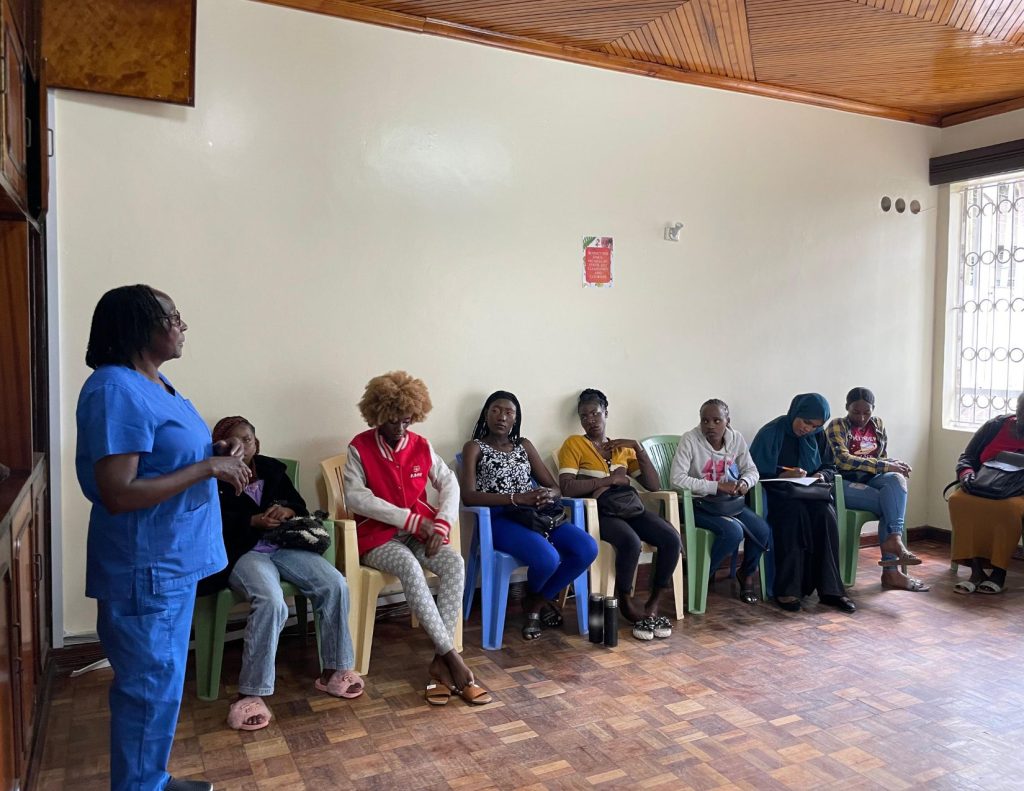
This is where RefuSHE steps in. We provide refugee girls with referrals, funds, and transportation stipends to access medical assistance through our network of partner clinics and hospitals. While most girls we serve are over the age of 18, some are minors and need security and translation. Our staff accompanies all minors to their appointments to ensure their safety and the accuracy of diagnosis and treatment. We have an on-campus nurse and partner with local hospitals to provide lab tests, medicine, and emergency care for refugee women and their children.
Home Visits & Material Support
65% of women and girls in Kenya cannot afford basic menstrual hygiene products. (Source: Amref Health Africa / USAID, 2024) For refugee girls — who face the added burden of displacement, disrupted income, and loss of family support networks — that gap is even harder to close.
Our case managers conduct regular home visits and support host families to ensure the protection of our beneficiaries and reduce future displacement. Our team also provides refugee girls, including those transitioning from the Safe House to independent living arrangements, with material support like rent assistance, food baskets, household items, sanitary products, and diapers for young mothers. The Case Management team helps ensures that young refugee women are able to meet their basic needs while at RefuSHE.
3,088
DIAPERS, SANITARY PADS, AND OTHER ITEMS OF MATERIAL ASSISTANCE DISTRIBUTED TO REFUGEE GIRLS IN 2021
Legal Aid & Referrals
Kenya hosts 226,119 registered asylum-seekers, reflecting sustained pressure on the country’s refugee registration and Refugee Status Determination (RSD) system. UNHCR previously reported that more than 168,000 asylum-seekers were awaiting refugee status determination decisions, highlighting persistent processing backlogs. Kenya is also estimated to host approximately 9,800 stateless persons, although ongoing government and UNHCR initiatives have significantly reduced statelessness through citizenship recognition and legal identity programmes. (Sources: UNHCR Operational Data Portal – Kenya, 2026; UNHCR Kenya – Refugee Status Determination; UNHCR Kenya – Statelessness.)
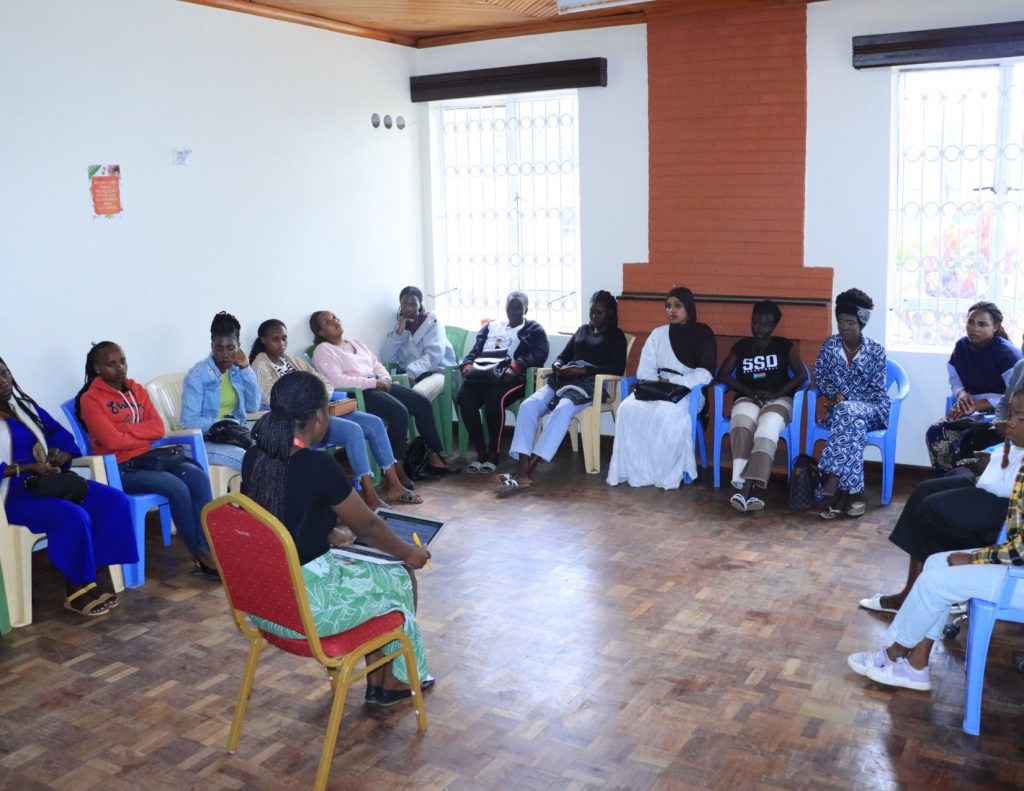
Against this backdrop, RefuSHE plays a critical role in helping refugee girls and young women navigate complex legal and protection systems. We provide in-house legal support and partner with numerous agencies to advocate for and protect refugee girls and young women in Nairobi. Case managers connect refugee girls with the Department of Refugee Services and the United Nations High Commissioner for Refugees (UNHCR) for documentation needs, asylum procedures such as registration, ID application and renewal and refugee status determination interviews. They also make referrals to the Red Cross for family tracing and work with HIAS on resettlement cases. We also refer refugee women and their children to legal aid clinics for appeals, custody orders, and child protection orders.