
Community-Based Protection & Livelihoods
Nearly 1 in 3 women worldwide have experienced physical or sexual violence — but among refugee and displaced women in Kenya specifically, that figure rises to nearly 2 in 3, the highest prevalence recorded in a recent regional review. (Sources: WHO, 2025; BMC Public Health, systematic review and meta-analysis, 2024 — as established on our GBV page)
RefuSHE’s mission to advocate for the rights and education of female refugees extends far beyond the walls of our campus. Our Community-Based Protection & Livelihoods Department promotes the prevention of and response to Gender-Based Violence/Sexual Exploitation and Abuse (GBV/SEA) through community awareness, vocational education, mental health intervention, and economic empowerment. To achieve this, we facilitate community-based training on human rights and Gender-Based Violence/Sexual Exploitation and Abuse GBV/SEA, strengthen the capacity of refugee women’s saving and loan groups, train refugee women to be community champions of Gender-Based Violence/Sexual Exploitation and Abuse GBV/SEA prevention, and offer case management and mental health services to refugee community members.
Gender-Based Violence (GBV) and Prevention of Sexual Exploitation and Abuse (PSEA)
Our team hosts regular information campaigns and workshops on Gender-Based Violence/Sexual Exploitation and Abuse (GBV/SEA) for refugee women and host community members within Nairobi’s broader refugee communities. In 2009, RefuSHE established the Sexual and Gender-Based Violence (SGBV) Stakeholders Committee in Nairobi, where we created a framework in collaboration with UNHCR and other partner organizations to address referral strategies and effective dialogue among survivors of Gender-Based Violence/Sexual Exploitation and Abuse (GBV/SEA.) Our community work allows RefuSHE to more effectively identify vulnerable women and children in Nairobi who have experienced Gender-Based Violence/Sexual Exploitation and Abuse (GBV/SEA) and connect them with medical support, shelter, and psychosocial counseling. We also train refugee women from our Women’s Ambassador Groups (WAGs) to become community educators on Gender-Based Violence/Sexual Exploitation and Abuse (GBV/SEA) prevention in their native language so that this information reaches more refugees.
70%
OF COMMUNITY MEMBERS LEAVE GENDER-BASED VIOLENCE (GBV) AND PREVENTION OF SEXUAL EXPLOITATION AND ABUSE (PSEA) TRAINING FEELING KNOWLEDGEABLE AND EMPOWERED TO ACT
Women’s Ambassador Groups
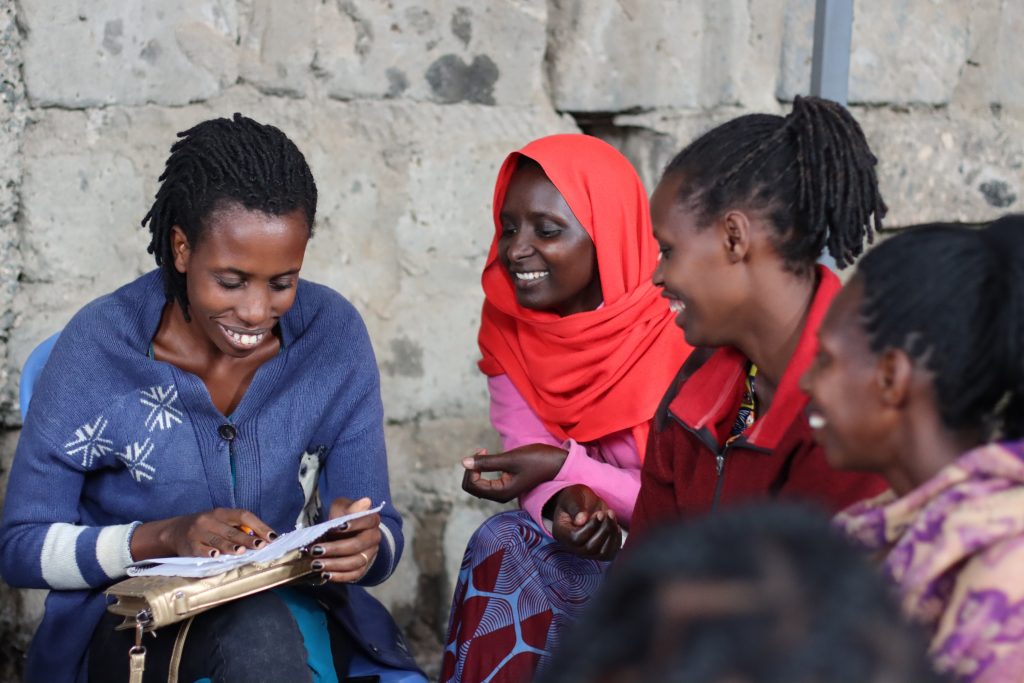
RefuSHE’s Women’s Ambassador Groups (WAGs) are the foundation of our organization’s community engagement work. Women’s Ambassador Groups (WAGs) members, many of whom are Gender-Based Violence/Sexual Exploitation and Abuse (GBV/SEA.) survivors themselves, serve as protection advocates and foster care parents to vulnerable refugee girls living in their community, as well as business mentors to young refugee women transitioning out of RefuSHE’s programs. RefuSHE currently supports over 1,200 women in 41 different Women’s Ambassador Groups across Nairobi’s urban refugee communities. These groups also comprise a small number of host community members, which helps foster social cohesion.
Economic Empowerment
Just 7% of women-owned micro, small, and medium enterprises in Kenya have formal access to finance. (Source: International Finance Corporation, 2024 — as established on our Artisan Collective page) Village Savings and Loan Associations (VSLA), the model RefuSHE builds on through Women’s Ambassador Groups (WAGs), exist precisely to fill that gap — nationally, 94% of Village Savings and Loan Association (VSLA) members in Kenya are women. (Source: CARE International Report, 2017)
Many refugee women in Kenya run their own microenterprises but are limited in their ability to grow and sustain their businesses without access to formal financial tools and services like bank accounts and loans, vocational skills training, and refugee-friendly service providers. As a result, refugee women remain in a cycle of poverty and high vulnerability.
Since 2013, RefuSHE has been a driving force for financial inclusion for urban refugee women through Women’s Ambassador Groups (WAGs) to ensure financial sustainability. The Women’s Ambassador Groups (WAGs) self-managed savings and loan groups are supported by RefuSHE to save, access affordable loans, invest in their livelihoods, and build financial resilience — advancing Sustainable Development Goal five on Gender Equity. RefuSHE provides Women’s Ambassador Groups (WAGs) with grants, training on business skills and group dynamics, and linkages to social development government offices and banks.
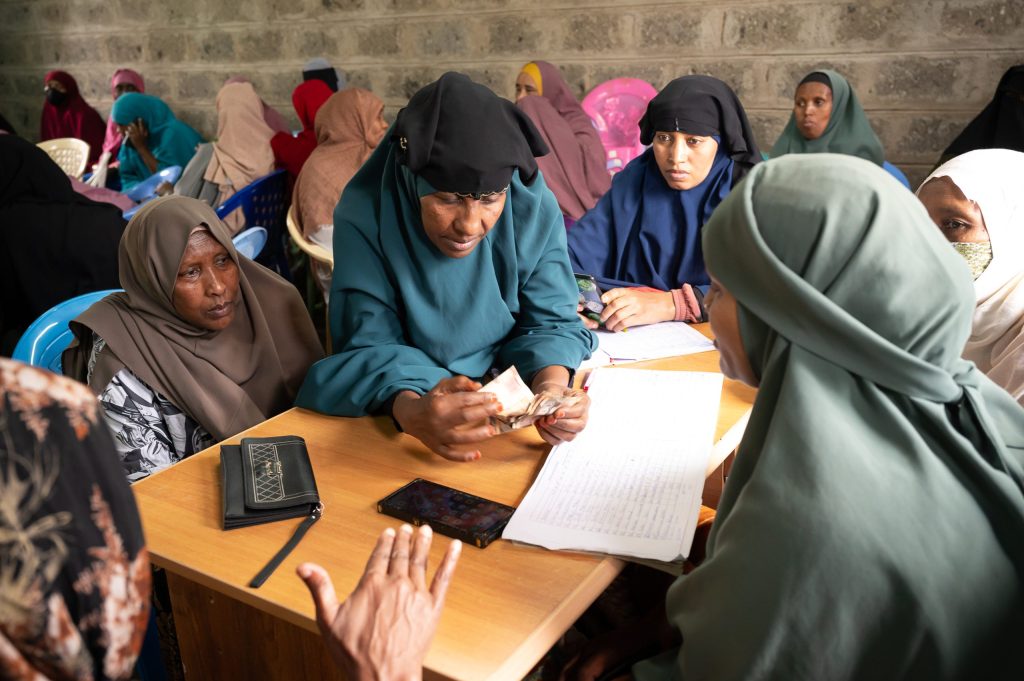
700+
WOMEN’S AMBASSADOR GROUPS MEMBERS HAVE RECEIVED A LOAN TO LAUNCH OR GROW THEIR OWN BUSINESS SINCE 2018
Case Management
RefuSHE also provides individual WAG members with business advisory services and case management support in collaboration with local partners. Our 24-month program offers women the core services they need to feel safe, heal from trauma, and become self-reliant. After completing the core service program, women are referred to local partner organizations that specialize in a range of services including mental health care and medical assistance and treatment.
The RefuSHE Community Structures
Kenya has only 150 practicing psychiatrists for a population of more than 50 million. (Source: Kenya Psychiatric Association, 2025 — as established on our Mental Health page) Community-based models like RefuSHE’s Para-Counselors exist to close that gap at the ground level, where specialist care alone cannot reach.
RefuSHE currently partners with community volunteers from Somalia, Ethiopia, the Democratic Republic of Congo, Rwanda, and Burundi, and supports outreach efforts across seven informal settlements in Nairobi.
Community volunteers serve as trusted bridges between RefuSHE and refugee communities across Nairobi’s urban settlements. As leaders deeply rooted in the communities where they live and work, they play a vital role in resolving local conflicts, providing interpretation services, and connecting refugee women, unaccompanied children, and separated youth to RefuSHE’s programs and support services. RefuSHE equips refugees with the skills to serve as Community Para-Counselors, expanding access to culturally responsive mental health support across Nairobi’s cosmopolitan communities. These trained Para-Counselors are based in the community and are the first line of responders. By empowering refugees to support their own communities, RefuSHE is strengthening mental health justice, fostering resilience, and improving access to critical resources for urban refugee communities throughout Nairobi.
SHElearns
Across Sub-Saharan Africa, 230 million women remain unconnected to mobile internet — the widest gender gap in digital access of any region in the world. (Source: GSMA, Mobile Gender Gap Report 2026 — as established on our Education page)
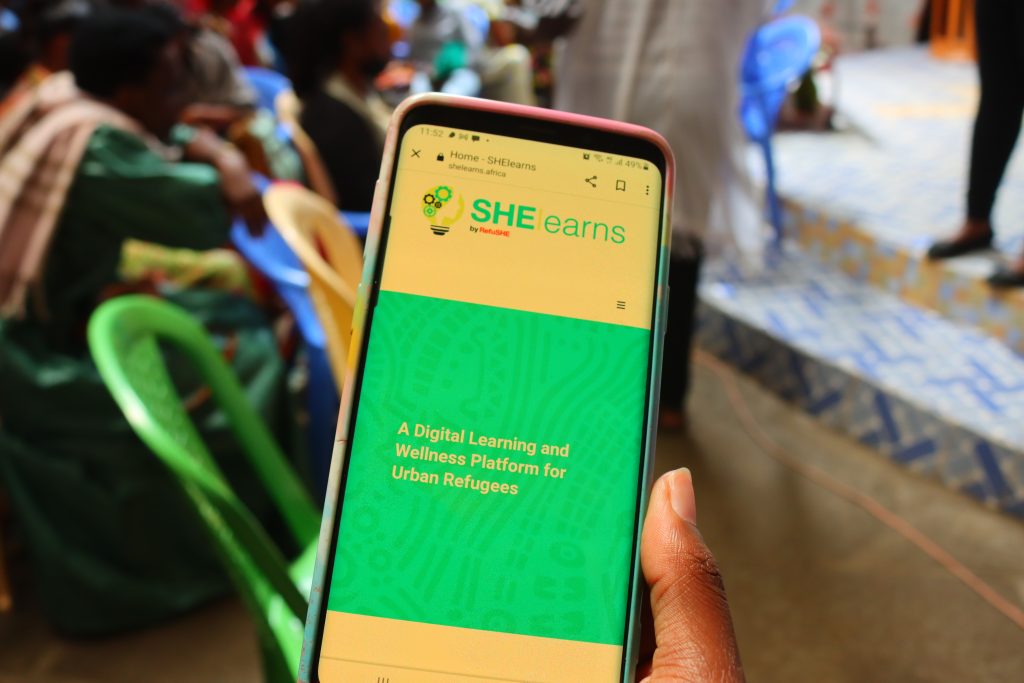
In 2020, RefuSHE was forced to adapt to the challenges brought on by the global COVID-19 pandemic by moving to a more digital-friendly service model. The success of virtual learning prompted a broader driving question: Is there a digital solution that can help more urban refugee women learn and improve their quality of life? In partnership with Mastercard Foundation, RefuSHE set out to create a fully digital eLearning and wellness platform for urban refugee women in Nairobi.
SHElearns helps refugee women develop the entrepreneurial and wellness toolkits they need to invest in their talents and create financial stability for themselves and their families. Through customized skill-building video content and digital tutorials led by refugee entrepreneurs, SHElearns is paving the way for urban refugee business development and wellness.
Advocacy
As of the end of 2021, more than 59,000 asylum-seekers in Kenya were still waiting for their refugee status determination interview. (Source: UNHCR, Kenya Country Summary, 2021 — as established on our Case Management page) Systemic delays like these are what makes policy-level advocacy, not just direct service, essential to protecting refugee rights.
In order to create a wider and longer-lasting impact for refugees, RefuSHE helps influence policy and promote local and global awareness of the refugee crisis in East Africa. In addition to offering community-based trainings and legal aid, RefuSHE regularly participates in panel discussions and policy roundtables to advance dialogue and solutions for urban refugees, advocate for the protection of unaccompanied refugee children, and publish reports on current trends and best practices. We also partner with the Department of Refugee Services and the Directorate of Children Services to train local government officials, police, and child protection volunteers on refugee and children’s rights in order to enhance the protection of refugee girls, women, and their children. Additionally, RefuSHE acts as a mediator between host community members and refugees when issues cannot be resolved by local leadership.
1,000+
LOCAL OFFICIALS HAVE BEEN TRAINED ON REFUGEE RIGHTS AND CHILD PROTECTION SINCE 2018